

![IMG_9152[1].JPG](https://images.squarespace-cdn.com/content/v1/53062174e4b0e1ea3fb10178/1403730813842-FAYVQTKM0D4HG7SM1D4K/IMG_9152%5B1%5D.JPG)
![IMG_9421[1].JPG](https://images.squarespace-cdn.com/content/v1/53062174e4b0e1ea3fb10178/1403731568903-URMZ6IY9IS3378HN8PAB/IMG_9421%5B1%5D.JPG)
![IMG_0162[1].JPG](https://images.squarespace-cdn.com/content/v1/53062174e4b0e1ea3fb10178/1407187703853-NJ5XGQQ6XQCK11N7TIM2/IMG_0162%5B1%5D.JPG)
![IMG_0385[1].JPG](https://images.squarespace-cdn.com/content/v1/53062174e4b0e1ea3fb10178/1407187390763-KRBNNA5DEZ2WBRR7QGKC/IMG_0385%5B1%5D.JPG)
bioregion
Five vineyards. Two landscapes. One Vermont watershed.
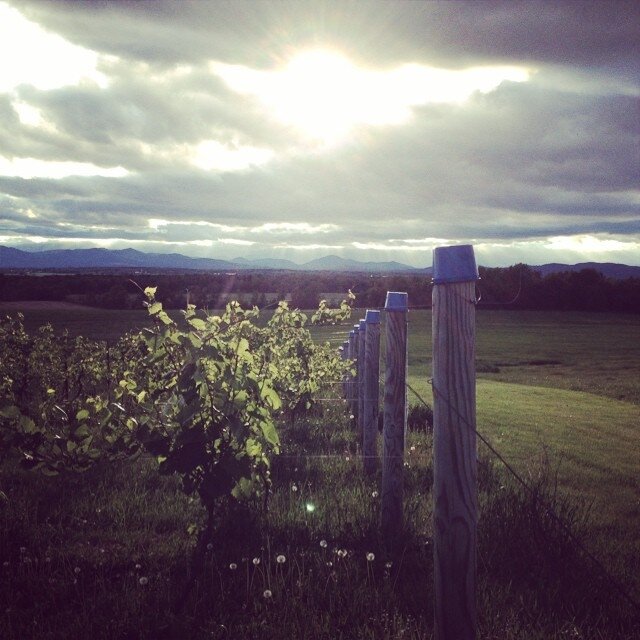
Our wines begin across five small vineyards scattered between the high country of central Vermont and the broad lowlands of the Champlain Valley. Each is its own world: different elevations, soils and bedrock, different exposures and weather, different plants and animals moving through them.
Together, they describe something larger—the particular geography of winegrowing in Vermont.
lake + mountain
To the west, our vineyards in Vergennes and West Addison lie in the Champlain Valley, an ancient landscape whose history begins hundreds of millions of years before there was a Lake Champlain—or a Vermont.
Some 450 to 480 million years ago, this land lay beneath a warm tropical sea in the Southern Hemisphere. In those waters grew the Chazy Reef, now exposed in places around Lake Champlain and recognized as the oldest known biologically diverse fossil reef on Earth. Its limestones preserve an early marine world of corals and other reef-building organisms, gastropods, cephalopods, brachiopods and sponges.
For a winegrower, the scale of this history can be difficult to comprehend. The celebrated Jurassic limestones of Burgundy were formed roughly 150 to 200 million years ago. The marine rocks of the Chazy story are more than twice as old.
Today, limestone, dolostone, shale and other sedimentary formations underlie much of the Champlain Valley. Above them lie the complicated traces of everything that followed: mountain building and erosion, advancing and retreating glaciers, glacial Lake Vermont, and briefly, after the ice withdrew, an arm of the Atlantic known as the Champlain Sea.
Our vineyards at Vergennes and West Addison grow within this long geological memory, on land opened toward Lake Champlain and the Adirondacks. The lake itself continues to shape the climate, moderating temperatures and helping create a growing season markedly different from that of our mountain vineyards.
Both vineyards lie within the proposed Champlain Valley of Vermont American Viticultural Area, whose defining character is closely tied to this lake-influenced climate.
Travel east from the lake and the story changes.
The land rises into the Green Mountains and Vermont Piedmont, and the geology becomes the record of collision.
Hundreds of millions of years ago, what is now New England existed along the edge of the ancient continent Laurentia. Offshore, volcanic island arcs formed above a subduction zone. During the Ordovician period, one of these arc systems moved toward the continent and collided with it, beginning an immense episode of folding, faulting, metamorphism and mountain building.
Fragments of that ancient volcanic world remain in the rocks of eastern Vermont and western New Hampshire today.
Our Barnard and Bridgewater vineyards occupy this mountain landscape: higher, cooler and more enclosed than our vineyards beside the lake, with metamorphic rocks—schist, phyllite, quartzite and their relatives—recording the pressure and transformation of that long tectonic history.
Here the growing season contracts. Weather moves quickly over the ridgelines. Warm days fall into cool nights, and cold air moves downhill through the vineyards.
The distance between our mountain vineyards and our Champlain Valley vineyards is not great on a map. Geologically and climatically, they can feel like different worlds.
Our wines are made in the conversation between them.
the vineyards
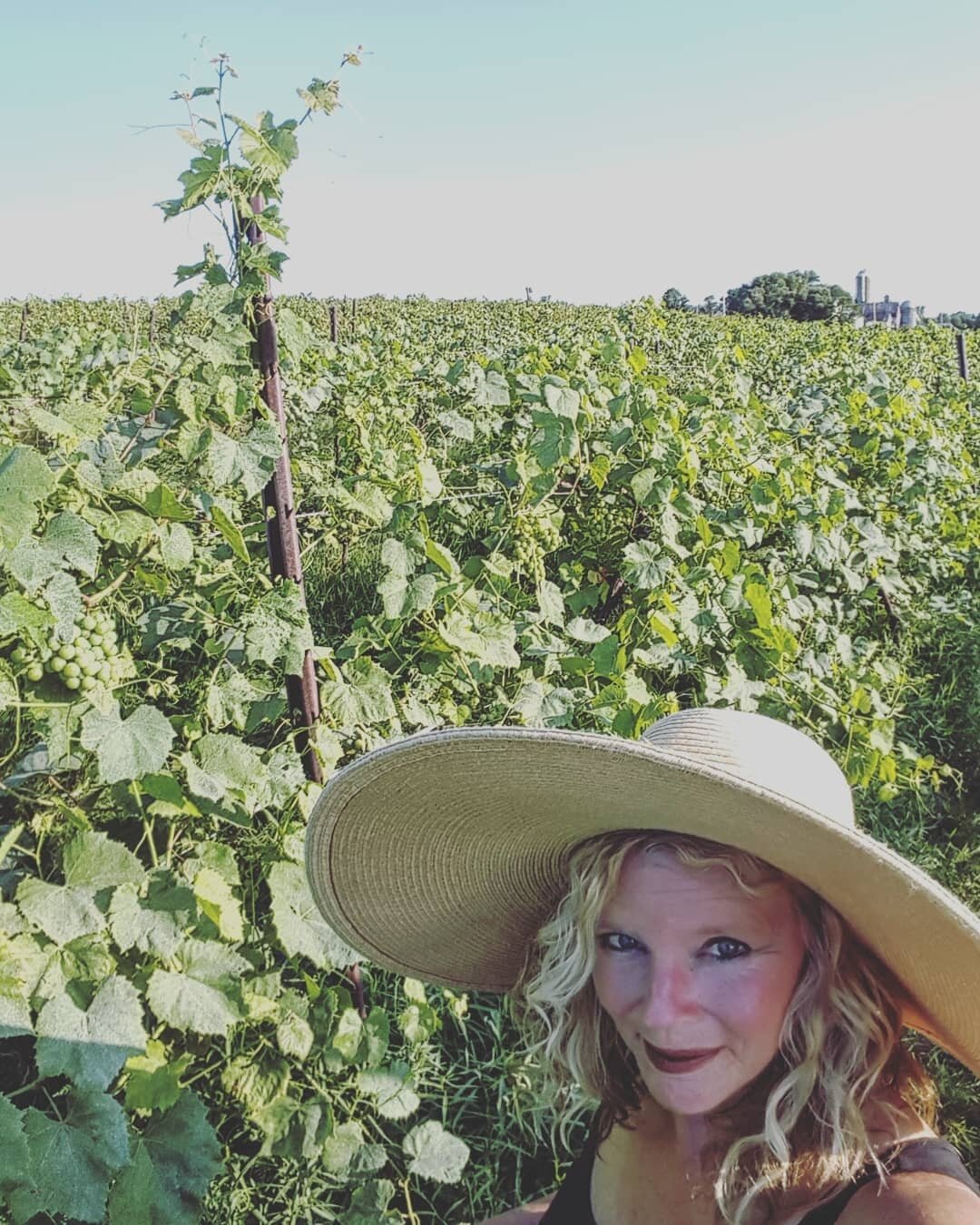
Across these five parcels we grow cold-hardy and resilient regional wine grapes that describe this northern landscape: La Crescent, Marquette, Frontenac Gris, Frontenac Blanc, Frontenac Noir, Brianna and St. Croix.
At La Selva, our vineyard in West Addison in the Champlain Valley, we have also begun planting historic American varieties, including Isabella and Léon Millot, extending our exploration of the long and sometimes forgotten history of wine grapes in the Northeast.
We don't think of these varieties as substitutes for grapes from somewhere else. They belong to their own history and their own landscape. Their character—aromatic, bright, deeply fruited, sometimes wild—is part of the language of northern wine.
Each vineyard tells the season differently. Lake or mountain breeze. Clay, limestone, schist and loam. Long western light or high-elevation coolness. What happens in these places eventually finds its way into the cellar, becoming still and sparkling wines with what we think of as an alpine spirit.
farming a place
We think of our work as ecological farming: farming that begins with observing the relationships already at work in a place.
Our practice has roots in biodynamics, organic and regenerative agriculture, but over the years it has grown beyond any single methodology. Each vineyard has its own geology, water, weather, plants, insects, animals and particular pressures. Rather than asking every parcel to conform to the same system, we try to understand the ecology of each place and respond to what it needs.
This means paying attention over time: learning how water moves through a vineyard, where cold settles, which plants arrive, which plants disappear, where insects gather, how the vines respond to drought and excessive rain, and how those relationships change from one season to the next.
We work with composts, native and spontaneous cover crops, plant teas and preparations, minerals, and rotational grazing with sheep. We encourage diversity within and around the vineyards and intervene when necessary to protect the vines and the larger health of the vineyard. The goal is not purity of method, but resilience: strengthening the capacity of the whole ecology to adapt, recover and remain alive.
We use the word practice deliberately. A place cannot be completely known, and ecological farming is never finished. It is a continuing relationship between farmer, plant, animal, weather and land.
Each vineyard becomes its own small world—and our work is to learn how to participate in it.
Each vineyard creates its own ecology.
flora + fauna
Our vineyards aren't monocultures.
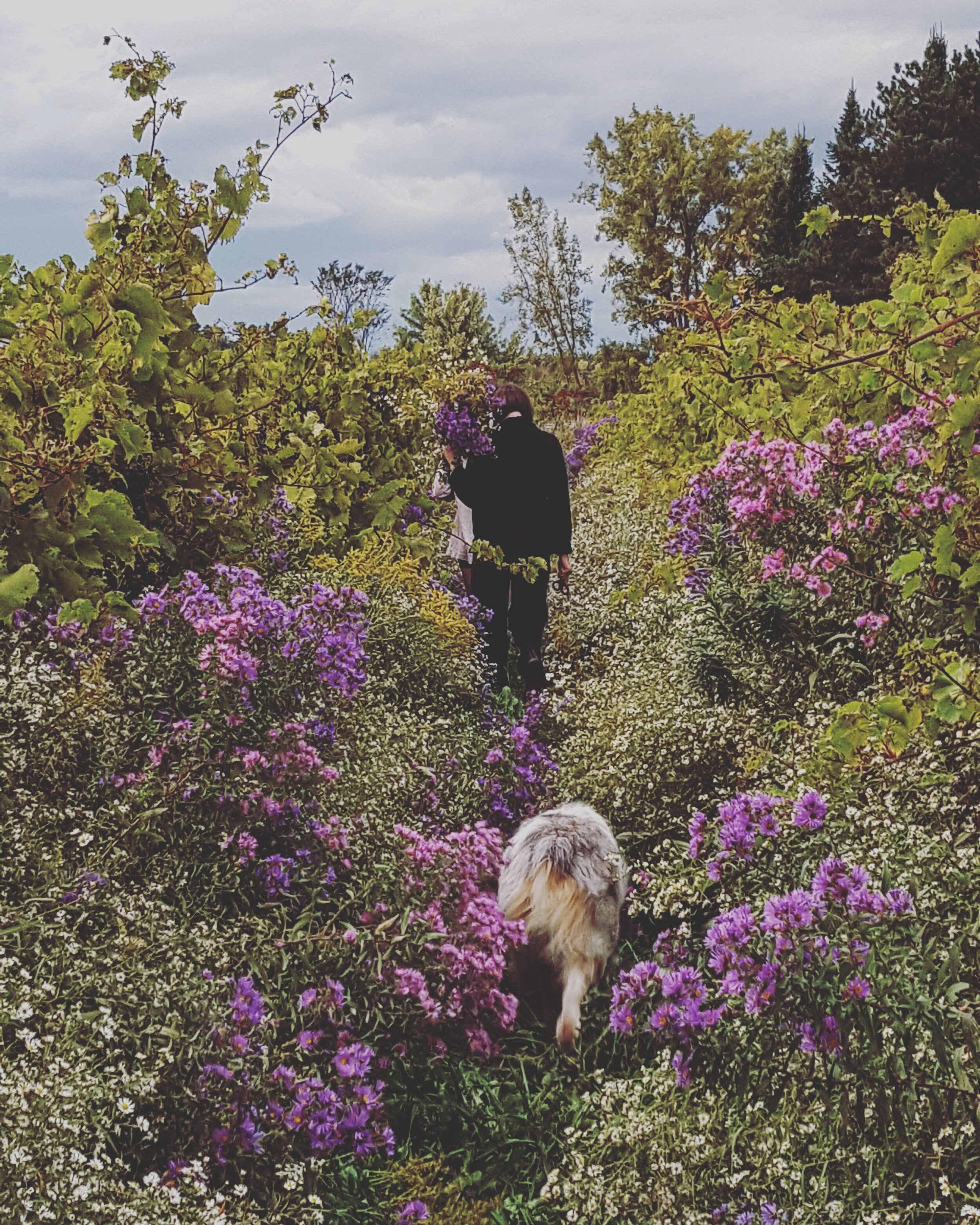
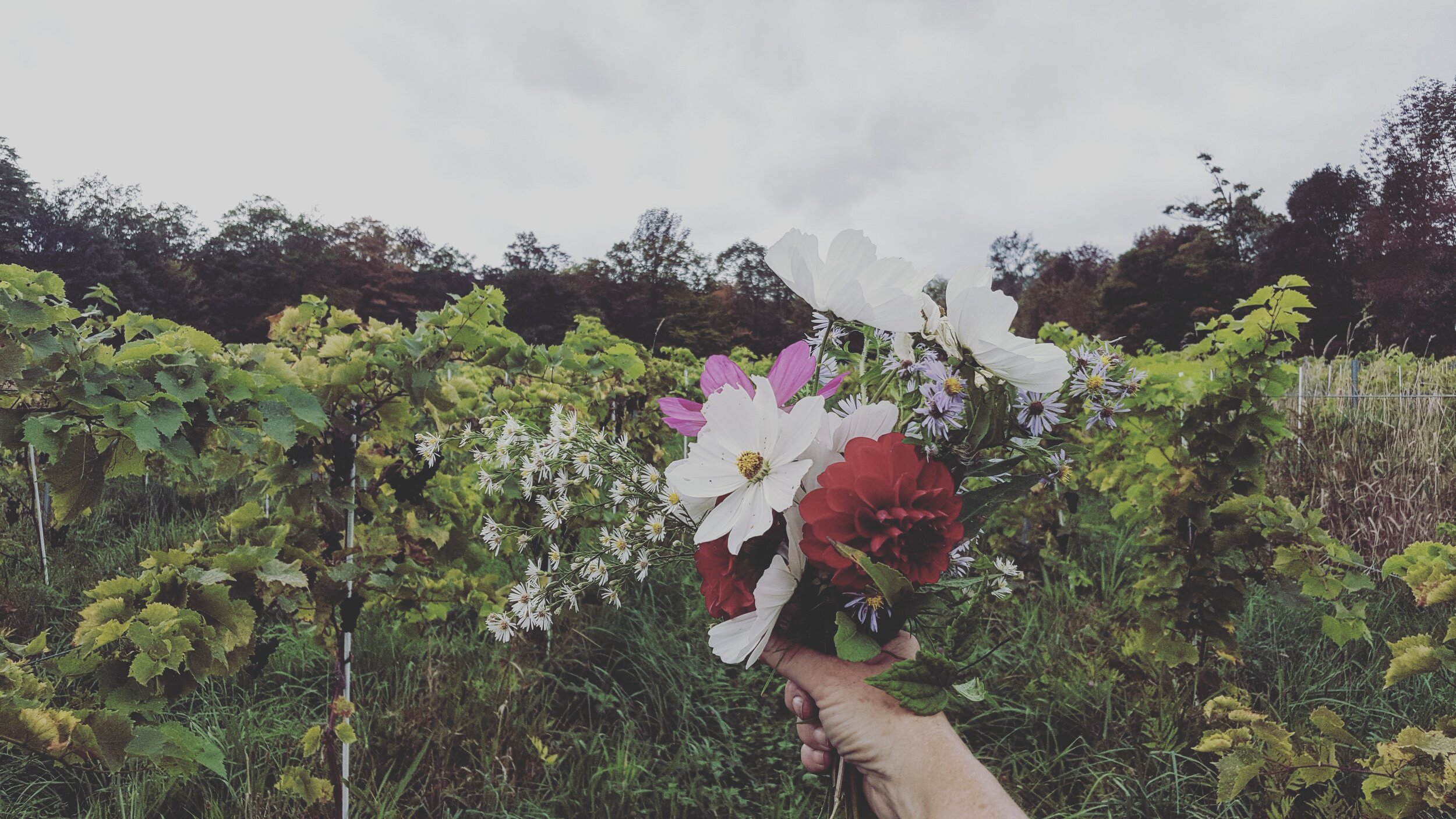
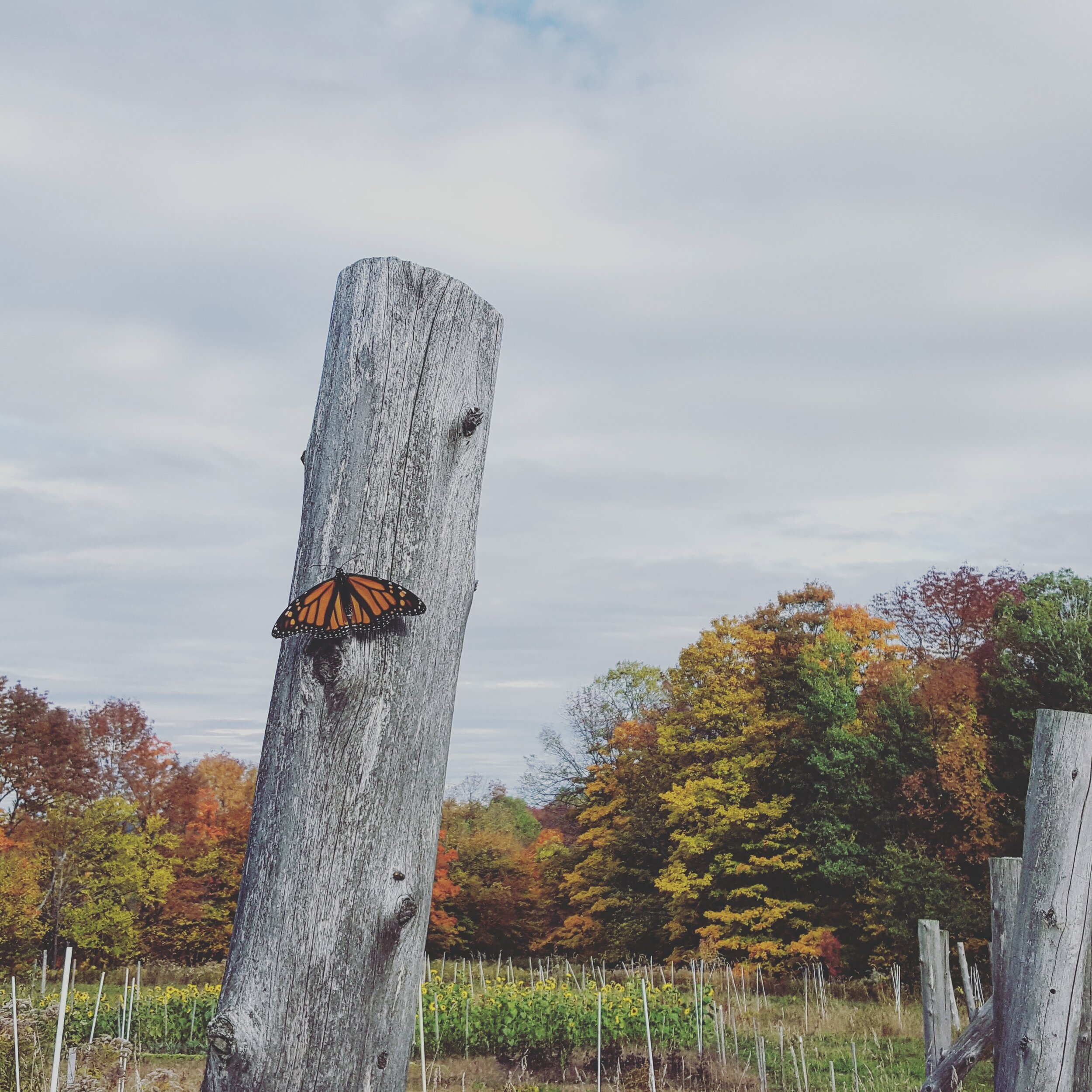
They can be a little Fauvist: grasses and wildflowers grow beneath the vines; bees and insects move through the canopy; birds, sheep and other animals pass through. Vegetables sometimes find their way between rows. Flowers weave through everything.
At the home farm, the boundaries blur even further.
There are many beating hearts here: vineyard, orchard, gardens, grazing sheep, pasture, kitchen, cellar and table. Onions meet roses. Potatoes, squash and carrots make homes near the vines. What grows in one part of the farm feeds another..
We think of the farm not as a collection of separate enterprises but as an interconnected ecology.
And ultimately, this is why the landscape matters to the wine.
Our work is not simply to grow grapes in Vermont. It is to understand what wine might become when it’s grown from here.